
Stage one: unscramble
Each line shows a jumbled word and a row of blanks. This part is an ordinary word scramble, and it is where most of the solving time goes.
100% Free & No Sign-Up
A two-stage puzzle: solvers unscramble your words, then copy the numbered letters into a final line that spells out your hidden message.
No account needed · Unlimited puzzles · Free printable PDF export
One extra layer changes the whole exercise.
Each line shows a jumbled word and a row of blanks. This part is an ordinary word scramble, and it is where most of the solving time goes.
Some blanks carry a small number underneath. Once a word is solved, that letter gets copied down to the matching numbered blank at the bottom of the page.
The bottom row spells your message. Solvers cannot read it until enough words are done, which keeps them working through the whole sheet instead of stopping halfway.
Designing a double puzzle by hand means counting letters. This does that part.
Pick your message and the tool finds a free slot for every letter, spreads the numbers across different words, and prints them in order.
If your message needs a letter your words cannot supply, you are told which letter as you type — before you print thirty copies.
A class rule, a birthday greeting, a lesson takeaway, a riddle answer. Anything up to a short sentence works.
The answer sheet fills in every word and the full message, using the identical layout so grading is a straight comparison.
Give the AI a theme and it proposes a word list together with a message its own letters can actually spell.
A4, Letter, A5 and custom sizes. Text stays sharp at any scale and the files stay small enough to email.
The tool does the letter bookkeeping; you choose the words.
Start with the sentence you want revealed. Short and punchy works best — under about twenty letters keeps the bottom row on one or two lines.
Enter your word list. Watch the coverage note: it names any letter the message needs and your words do not yet contain.
Download the puzzle, then the answer key. Numbered blanks and the reveal line are already positioned for you.
Four rules that save a reprint.
Q, X, Z and J are the usual culprits. If your message contains one, make sure at least one word does too — or rephrase.
A message needing three E's needs three E's across the whole word list, not one word containing E. The coverage check counts for you.
Ten to fifteen words gives the numbering room to spread out, so no single word carries half the message.
The reveal lands better when it ties to the word list — holiday words revealing a holiday greeting, unit vocabulary revealing the unit's key idea.
Anywhere the reward for finishing matters more than the puzzle itself.
Same idea, different mechanic.
Ideas for printable word puzzles and classroom activities
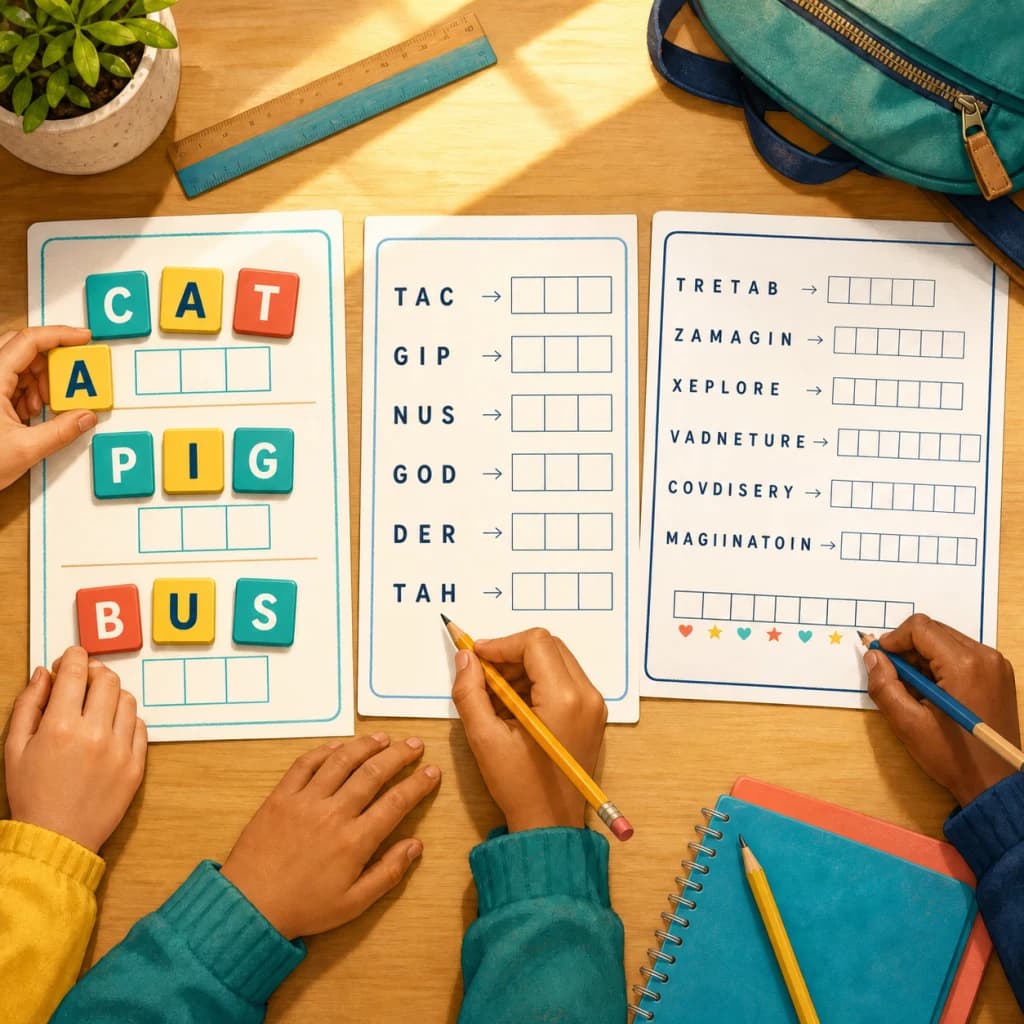
How teachers and parents use word scramble worksheets from K-2 to middle school, with a free printable back to school list and difficulty tips per grade.
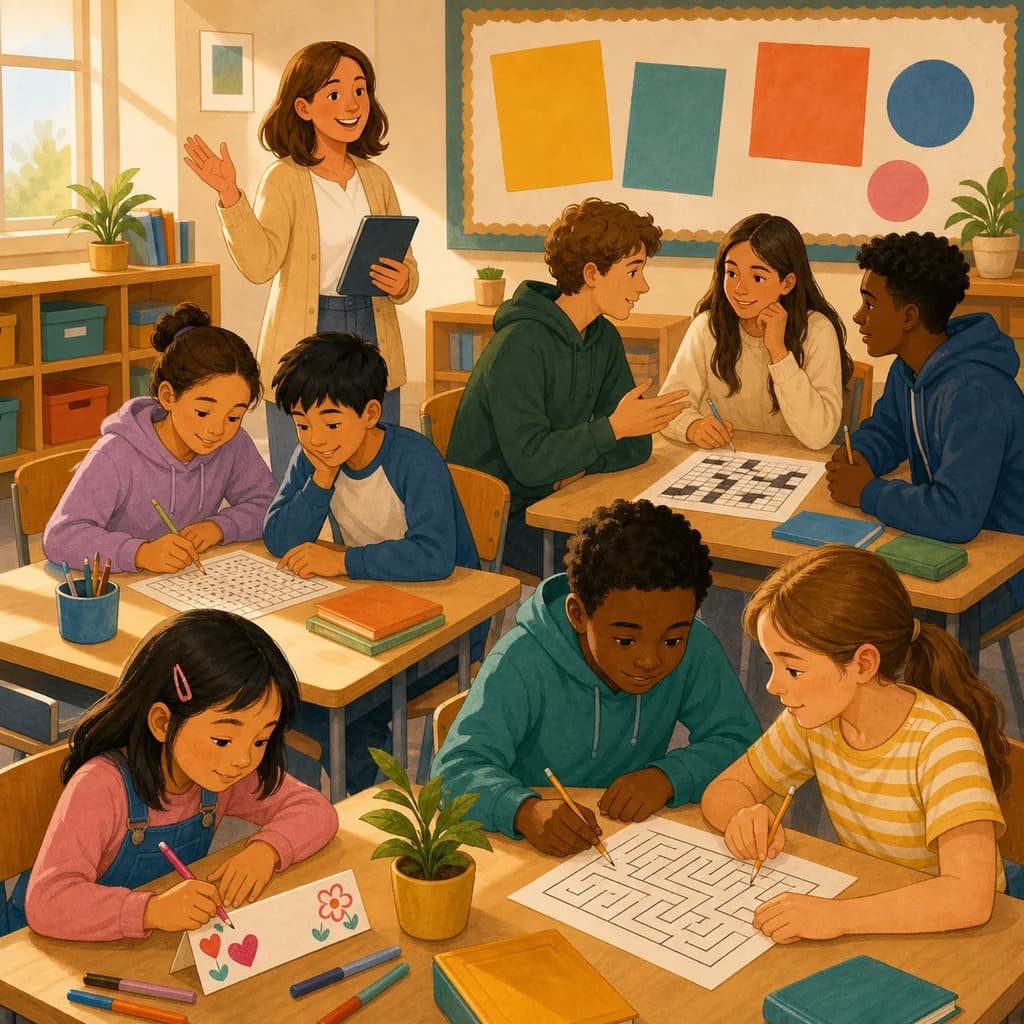
Low-prep first day of school activities for kindergarten through high school, plus a free printable back to school word search and crossword for day one.
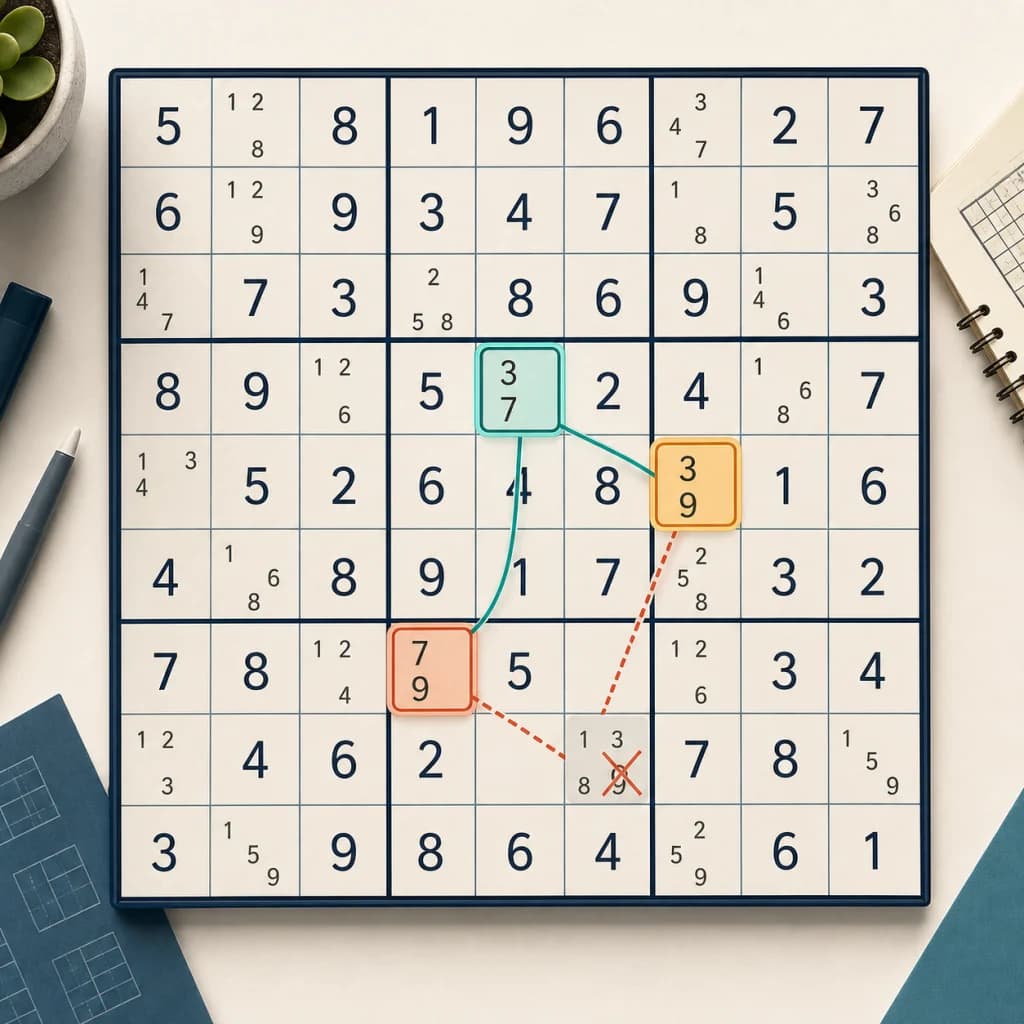
A clear, step-by-step guide to the y wing sudoku technique: what a y-wing is, how to find the pivot and pincers, and how it differs from an X-Wing.
Try our other free puzzle generators
Create custom jigsaw puzzles from your photos
Generate printable Sudoku puzzles with 4 difficulty levels
Build crossword puzzles with your own words
Make word search puzzles for any occasion
Create nonogram puzzles from images or hand-drawn grids
Create custom bingo cards with AI-powered word lists
Create printable mazes with adjustable size and difficulty
Turn quotes into letter-substitution puzzles, printable or shareable
Turn any word list into a printable scramble worksheet with answer key
The questions that come up before the first print run.
Type the sentence, add the words, print both sheets. The letter counting is handled.
Start Building